Reviews
The one-minute paper test: saving a purchase before it goes wrong
The six properties that decide whether a paper suits your pen, the shop test that reads them in a minute, and why most paper you try should be rejected.
Buying paper twice is the normal outcome. You buy something described as smooth, discover your nib skates on it, and buy again. The way out is not better descriptions. It is a short list of properties you can read yourself, a fixed test, and a willingness to reject most of what you try.
What to take away
- Six properties account for nearly everythingsizing, weight, opacity, surface, color and pH.
- Only sizing and surface can be judged with a pen, so bring one.
- Reject freely. Serious paper studies reject most candidates before analysis begins.
- Buy one pad, test it, then buy deep. Never the other way around.
The six properties
| Property | What it decides | How to read it |
|---|---|---|
| Sizing | Feathering, dry time, line sharpness | Write on it, wait, drag a finger |
| Weight | Bleed resistance, feel | Stated in grams per square meter |
| Opacity | Show-through on the reverse | Hold one sheet over printed text |
| Surface | Feedback, whether a fine nib skates | Run a fingernail across it |
| Color | How every ink you own will read | Compare beside a known white sheet |
| pH and buffering | Whether it yellows in a decade | Stated on the wrapper, or not stated |
Rejecting is the method
The instinct is to find the right paper. The better instinct is to eliminate. The University of Iowa applied selection criteria to its study of historical papers, ruling out any with a history of washing or resizing.
Rejection ratio
- 4000specimens considered
- 2400rejected
- 1578went forward for analysis
That ratio is instructive. A rigorous comparison throws away more than half of what it looks at. If every paper you try seems acceptable, your test is not discriminating.
Descriptions do not survive contact
Words like handmade and smooth cover enormous variation. Researchers used near-infrared hyperspectral imaging to classify traditional handmade papers from China, Japan and Korea.
Xuan paper, washi and hanji look alike, sharing cellulose-rich compositions, so separating them by country and product type required spectra and machine classifiers.
If instruments are needed to tell paper traditions apart, a product description will not tell two pads apart for you. Test instead.
The one-minute shop test
- Hold a sheet to the light. Look at formation, and look for a watermark.
- Run a fingernail across the surface and listen. Hard sizing sounds different.
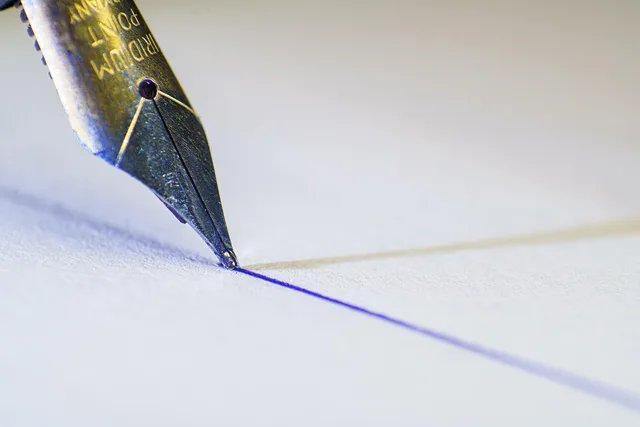
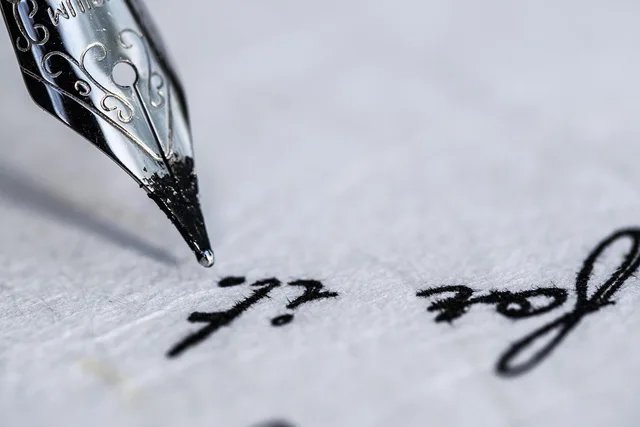
- Write a sentence, a heavy stroke and a tight scribble with your own pen.
- Count seconds to the dry point with a finger drag.
- Turn it over and look for bleed.
Five steps, one minute, and you will not buy that paper twice. If the shop will not let you write, buy the smallest quantity they sell. Run the same five steps at the desk before opening anything else.
One test pad is far cheaper than a box bought on a description that meant nothing in your hand.
What the properties are made of is covered in what paper is made of, and the small kit that makes these tests repeatable at home is in the tool kit.
Common questions
Is heavier paper always better for fountain pens?
What does smooth mean on a package?
Should I care about pH if I am only writing lists?
How many papers should I test before settling?
In this guide
- Stopping curl, acid and light from ruining stored paperCurl, acidity and light are what ruin stored paper. What each one does, which damage is reversible, and a storage routine that prevents all three.
- Seven small paper experiments that each teach one lessonSeven short experiments on paper itself: grain, sizing, opacity, weight, watermarks, fiber and aging, each with the result you should expect.
- Paper conservators know things most buyers never hearNo interviews here. What published conservation research establishes about paper strength, sizing and aging, and which parts of it should change how you buy paper.
- A five-tool starter kit for testing fountain pen paperFive cheap tools that turn paper opinions into measurements, plus the structured recording habit that makes a year of small tests actually worth something.
- Do fiber and sizing decide how fountain pen paper performs?Fiber, sizing and alkaline reserve decide how paper writes and how long it lasts. What each ingredient does, and what to look for on the package.