Reviews
Part of Does a real stationery maker look any different from a rebadged import?
Choosing paper, adhesive and covers for a small stationery run
Independent stationery brands materials: paper, adhesive and covering material decisions for small runs, why the glue matters more than beginners expect.
Choosing materials for something you will sell is a different exercise from choosing for yourself. You need repeatability, availability in a year, and materials that will still look right after a customer has owned the thing for a season. Three decisions carry most of that: the paper, the adhesive and whatever covers the outside.
What to take away
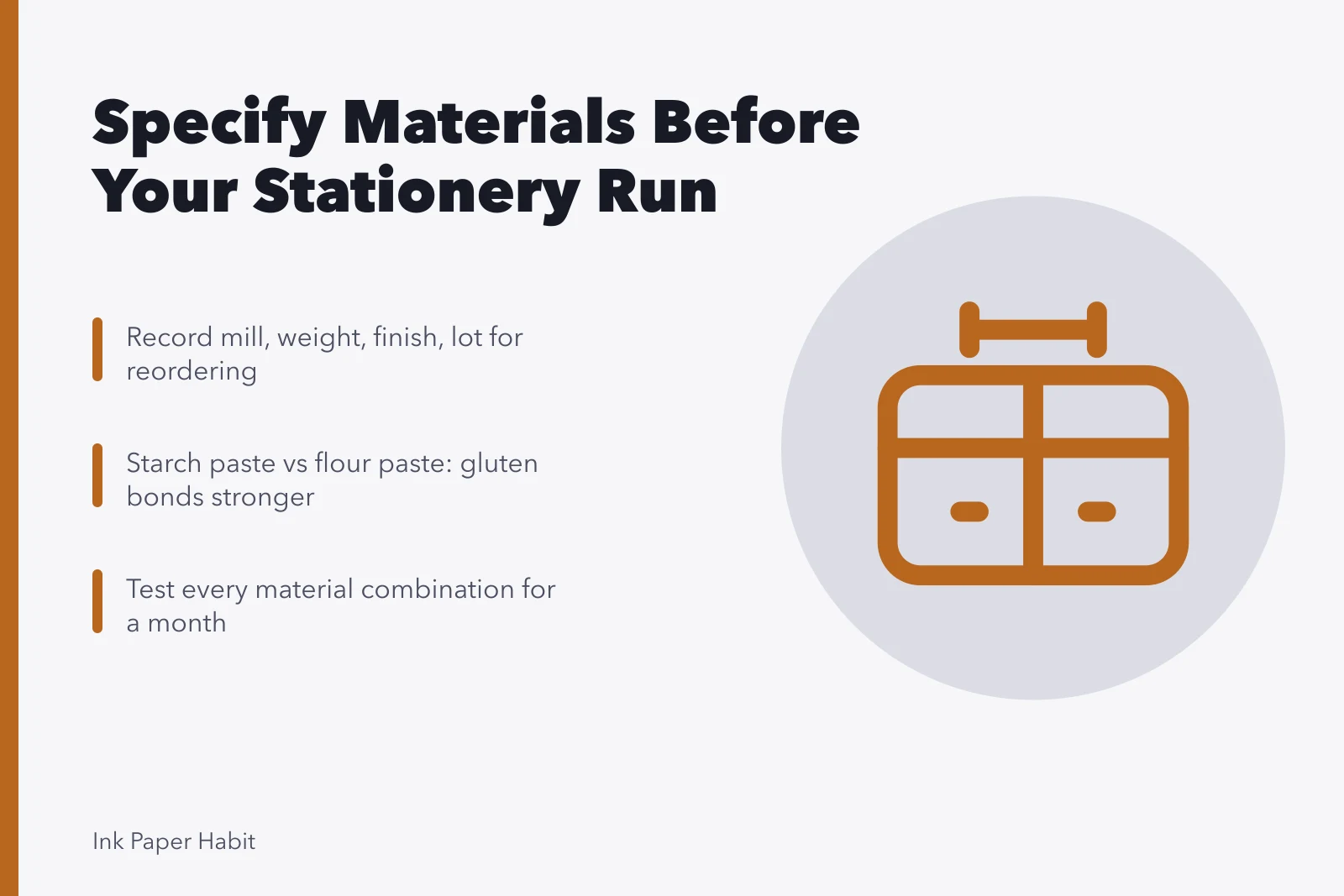
- Specify materials so you can reorder them. A material you cannot name again is a one-off.
- Adhesive choice decides whether a bound object survives handling and humidity.
- Starch paste and flour paste are different materials with different properties.
- Test every material combination for a month before committing to a run.
Specify what you buy
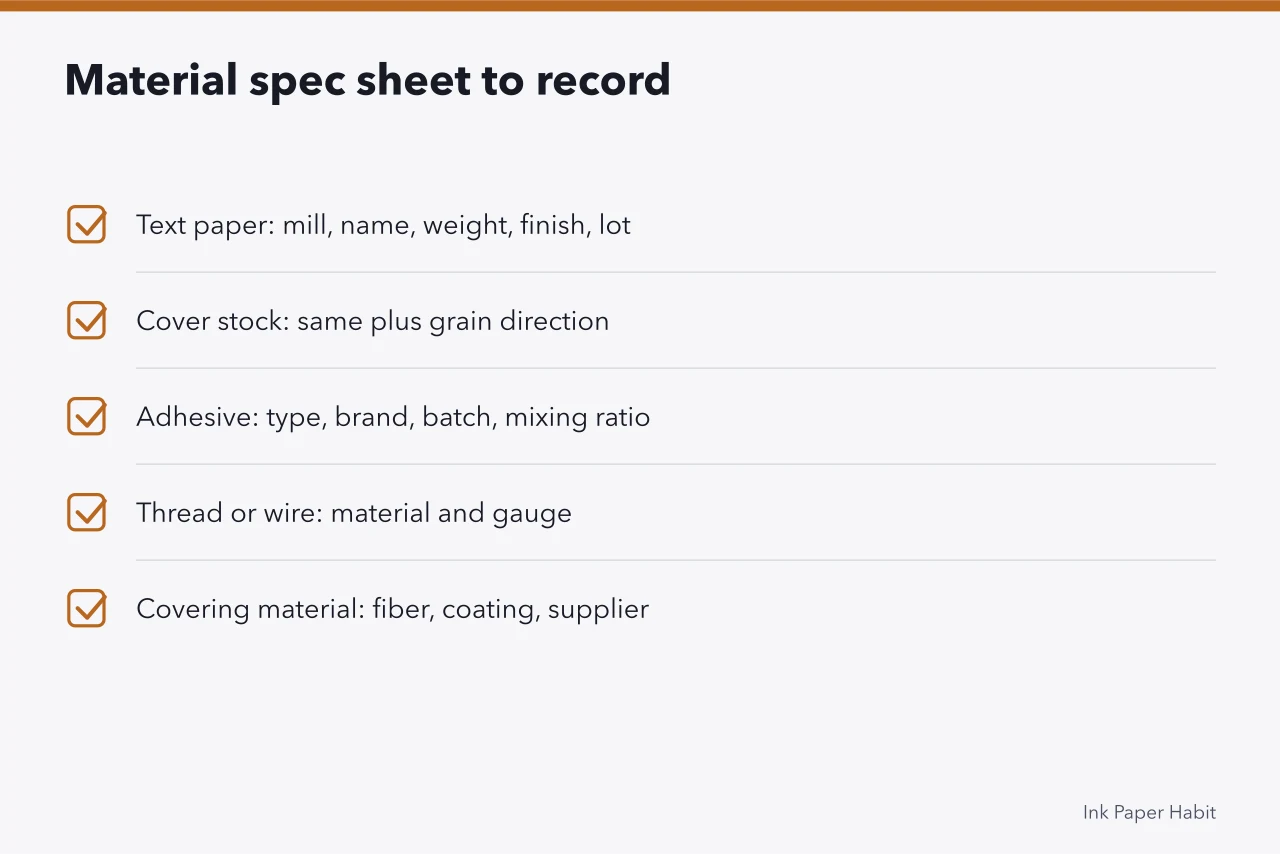
| Material | What to record | Why |
|---|---|---|
| Text paper | Mill, name, weight, finish, lot | Reordering and complaint tracing |
| Cover stock | Same, plus grain direction | Grain across a spine cracks |
| Adhesive | Type, brand, batch, mixing ratio | It is the usual failure point |
| Thread or wire | Material and gauge | Affects how the book opens |
| Covering material | Fiber, coating, supplier | Fades and scuffs differently |
A specification you could hand to a stranger is the test. If your notes say nice cream paper, you have not specified anything. A written spec is the same habit that keeps a small run repeatable, and it starts with a first-run stationery tool kit.
The adhesive is the decision people underrate
Glue is where handmade stationery fails, and choices aren't interchangeable. Research on wheat-based glues in conservation sets out the distinction: starch paste comes from starch granules alone.
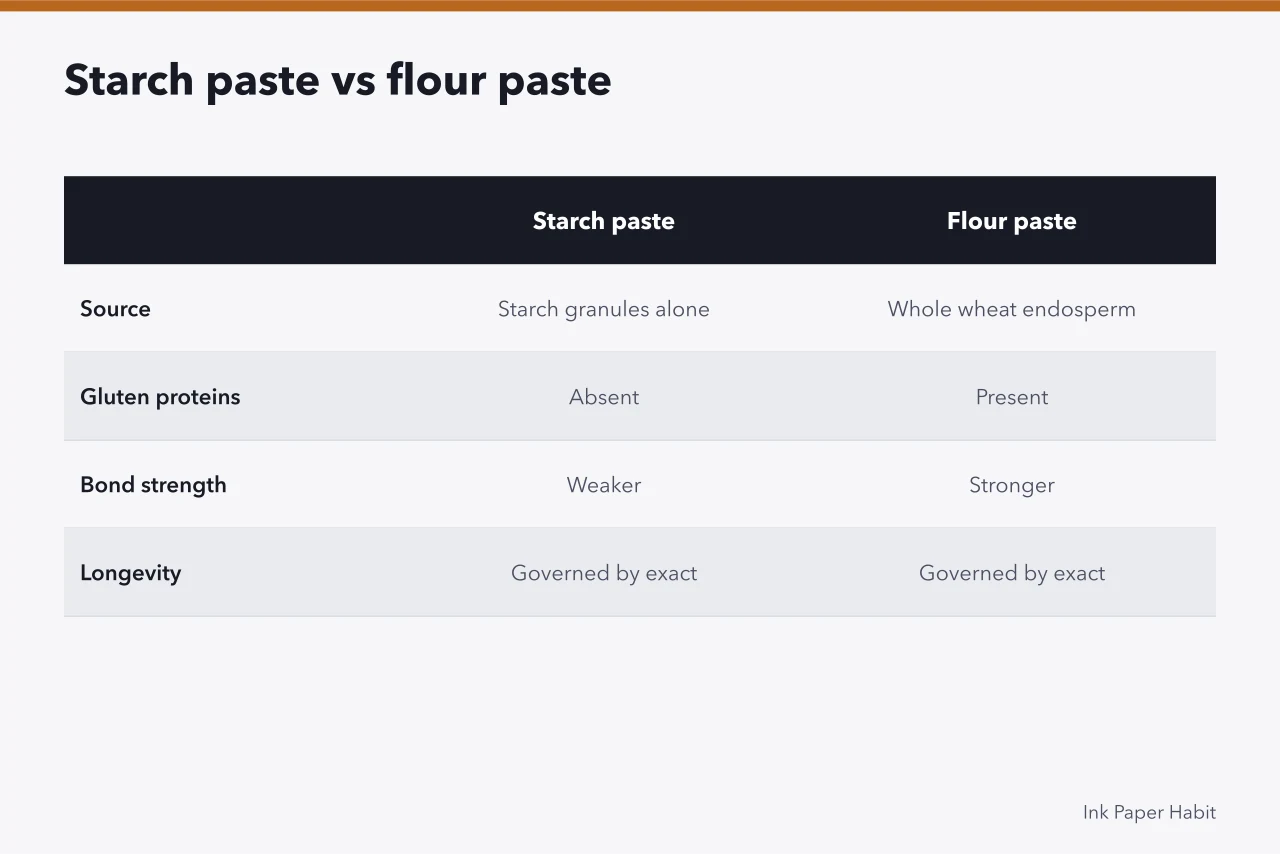
Flour paste carries the whole wheat endosperm, including gluten proteins, so it bonds more strongly. The adhesive's exact nature governs longevity, resilience, and environmental response.
Covering materials and the long view
Cloth, paper and coated stock age differently, and how a material was made shapes what it does, so know what your covering material is.
Parchment is the instructive case. The Illinois guide notes that parchment is animal skin treated with enzymes or lime, scraped and dried under tension. It stayed the preferred support for important legal documents into the early twentieth century, even after paper largely replaced it.
Materials get chosen for durability under specific conditions, not in general. Ask what conditions yours was made for, and whether a customer's desk resembles them. Paper is the material customers judge most, so run the one-minute paper test before you commit to a ream.
Availability is a material property
A paper that is discontinued next spring is a bad choice however well it performs, because a repeat customer will notice and a reorder becomes a redesign. Ask the supplier whether a line is stocked or a clearance lot before you build a product around it.
A material decision process that works
- Buy one sheet or one meter of each candidate.
- Make one complete prototype, not a swatch.
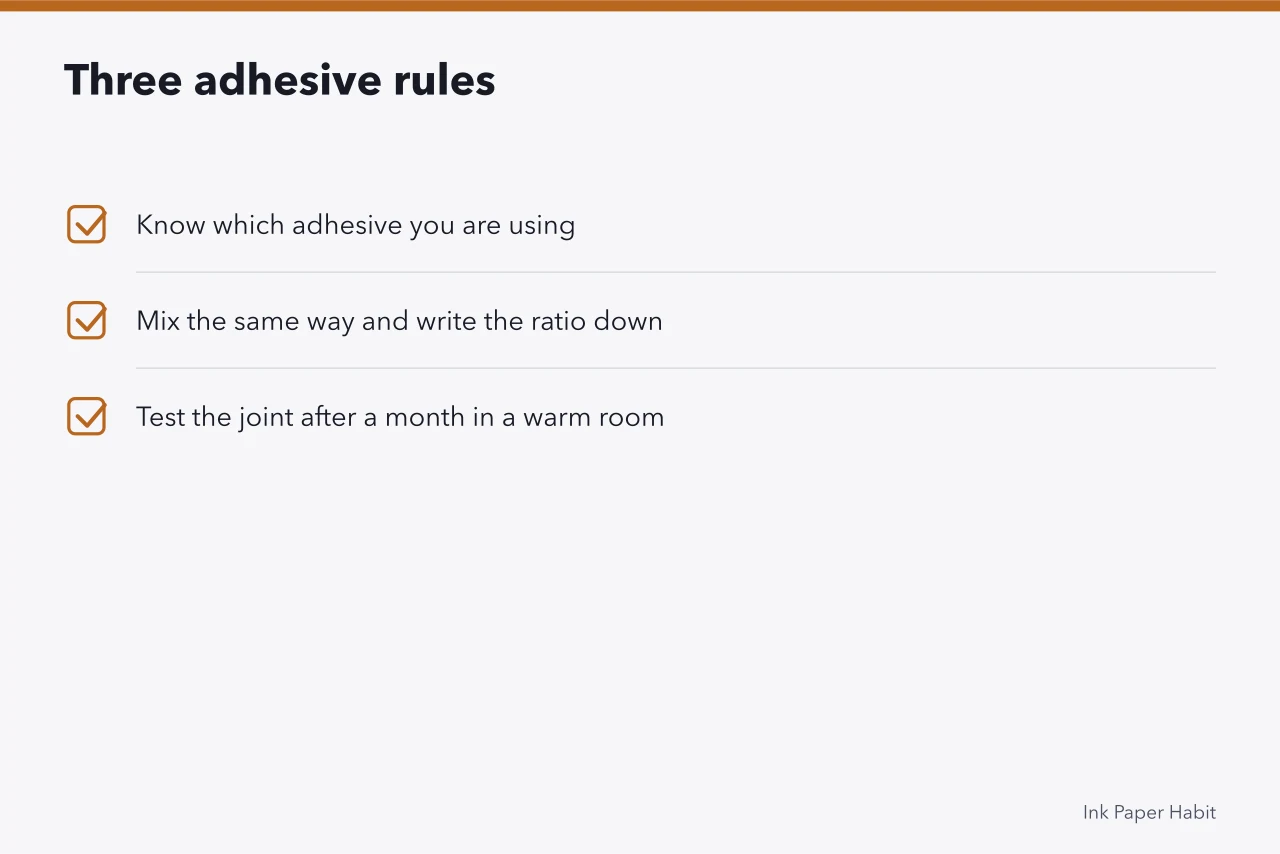
- Keep it on a desk in normal use for a month.
- Open it, flex it, and look at every joint and fold.
- Only then order enough for a run, recording the lot.
That month is the whole method, and it is why materials decisions should be made well before a launch date. The buying-side questions that mirror these are in judging a brand, and the storage that protects the stock once bought is in storing stock.
Common questions
Is PVA adhesive acceptable for work I sell? Widely used and generally fine for commercial work. Conservation-grade decisions are different, and matter if the object is meant to be archival.
Does grain direction really matter? Yes, more than almost anything else in binding. Grain must run parallel to the spine or the cover will crack and the book will not stay open.
How do I keep a material available for reorder? Buy from suppliers who stock a line rather than a clearance lot, and ask directly whether a paper is a stocked item or a one-time purchase.
Should I switch materials to cut costs? Only after a prototype and a month of testing. A cost saving that changes how the object ages is not a saving.