Maintenance
Part of Can pen storage earn its price, or is it just decoration?
Seven pen storage habits that quietly damage your pens
The storage habits that damage pens: over-drying with desiccant, crumbling foam, tight elastic, and the drawer that seemed like the safe option.
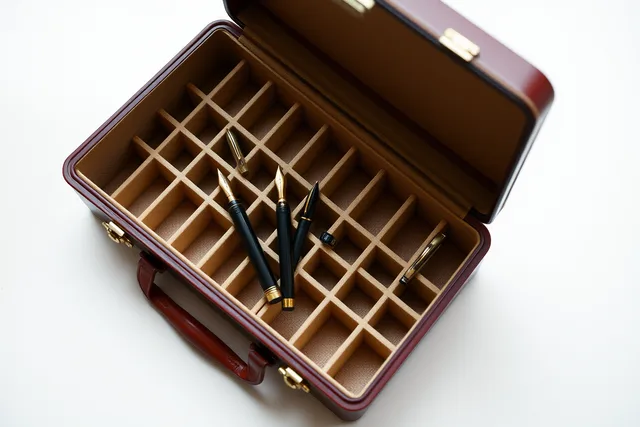
Storage damage is slow and it is nearly always self-inflicted. Nobody drops a pen into a drawer intending to ruin it. They line a box with foam that later crumbles, add a desiccant sachet that dries a seal out, or store a filled pen nib down for a year. Here is the list, and what to do instead.
What to take away
- Desiccant is a control tool, not a general-purpose good. Over-drying damages seals and some plastics.
- Foam inserts break down, and they break down faster in a humid room.
- Elastic loops that grip a pen tightly will mark it and can crack a cap lip.
- A pen stored full for a year is a cleaning job you have scheduled for your future self.
The seven storage mistakes
| Mistake | What it causes | Instead |
|---|---|---|
| Desiccant with no monitoring | Dried seals, shrunken converters | Measure humidity before treating it |
| Cheap foam lining | Crumbs, sticky residue, staining | Wool felt or cotton |
| Tight elastic loops | Marked barrels, cracked cap lips | Loose sleeves or a tray |
| Filled pens stored for months | Dried feeds, hard starts | Empty and rinse before storing |
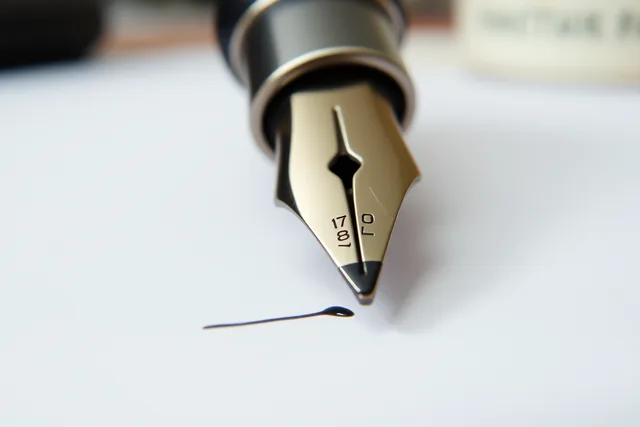
| Nib down in a pot | Ink in the cap, blots on uncapping | Nib up or flat |
| Sunny windowsill display | Faded barrels and inks | Anywhere else |
| Sealed box in a damp room | Trapped moisture, mold | Ventilate rather than seal |
Desiccant does not mean drier is better
Silica gel is the usual home remedy and it is misunderstood. It works by adsorbing water vapor until it reaches equilibrium with its surroundings, and its behavior depends on both the humidity and the temperature. Experimental work characterizing silica gel adsorption and desorption isotherms under varying conditions shows how strongly that uptake depends on the conditions it is placed in.
Desiccant: sealed or unsealed?
Is the container sealed?
pulls humidity well below sensible
equilibrates with room, does nothing
The practical points are two. A sachet in an unsealed drawer does almost nothing; it equilibrates with the room. A sachet in a sealed case can pull the enclosure well below a sensible humidity. That harms seals, leather, and older plastics.
Measure first. Treat a specific problem instead of adding desiccant by habit.
Why foam fails
Foam inserts look like the professional solution and are the most common source of long-term mess. Polyurethane foams degrade, and moisture is part of the mechanism. Research on how relative humidity influences fungal degradation of polyester polyurethane shows that the surrounding humidity governs how quickly a common foam chemistry breaks down.
That is what produces the yellow crumb inside an old case. Wool felt and cotton do not do this. Neither does a rigid tray with a fabric lining you can remove and wash. A rigid tray with a removable lining is also the kind of small-space setup that keeps pens from touching each other.
The mistake behind the mistakes
Every item on the list above comes from treating storage as a container problem when it is an environment problem. The drawer, the room and the humidity decide most of what happens to a stored pen. The box only decides whether it gets scratched. Fix the environment first and cheap storage becomes adequate.
Fixing storage that has already gone wrong
Take everything out, discard foam that has yellowed or crumbled, and wipe the pens with a barely damp cloth. Empty and flush anything that has been stored inked, then replace the lining with felt.
If the case smells, do not put pens back into it. What good storage must achieve is set out in judging pen storage, and the general fault list is in pen mistakes and fixes.