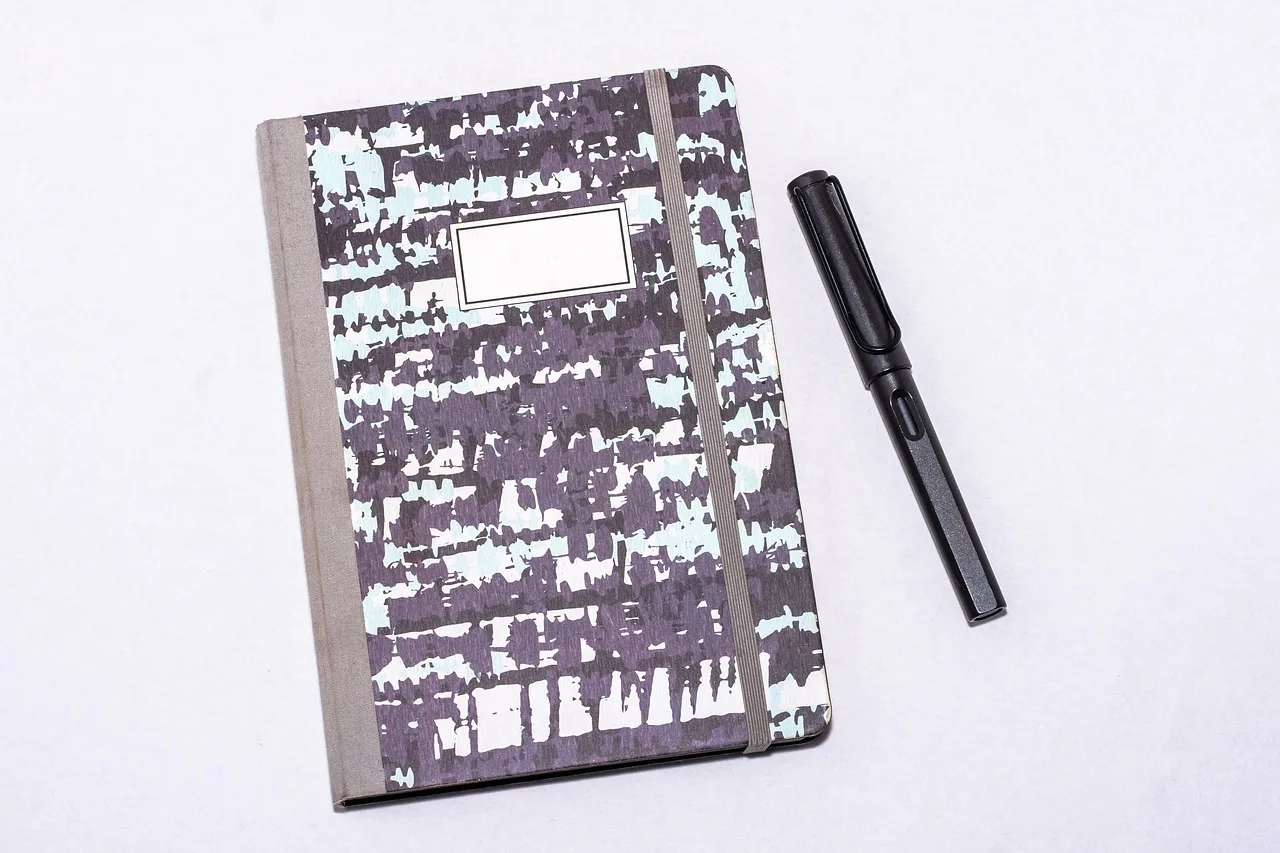
Guides
Part of How fountain pen ink reaches the paper: a beginner's guide
Fountain pens setup: fitting everything onto one shelf
Build a fountain pens setup on one shelf with a Pilot Metropolitan, Iroshizuku ink, a Rhodia notebook, covered bottle storage and a rinse station.
A fountain pens setup can fit in a small space: you do not need a studio to write by hand. You need about two feet of stable surface. Put light over your non-writing shoulder. Keep a water cup where it cannot tip into an open notebook. Give bottles a closed place.
Everything else is preference. In a small setup, storage mistakes cost money, not equipment mistakes.
What to take away
- Two feet of firm surface and a light source on the correct side solve most of it.
- Flush with soft water if your tap runs hard, or with distilled if you are unsure.
- Keep bottles upright, capped and boxed. A tipped bottle in a drawer ruins the drawer.
- Damp is the enemy of stored paper. Cool, dry and dark beats any container you can buy.
The surface and the light
A desk that flexes when you lean will show in your letters. A dining table or an old door on trestles beats a folding desk with a wobble.
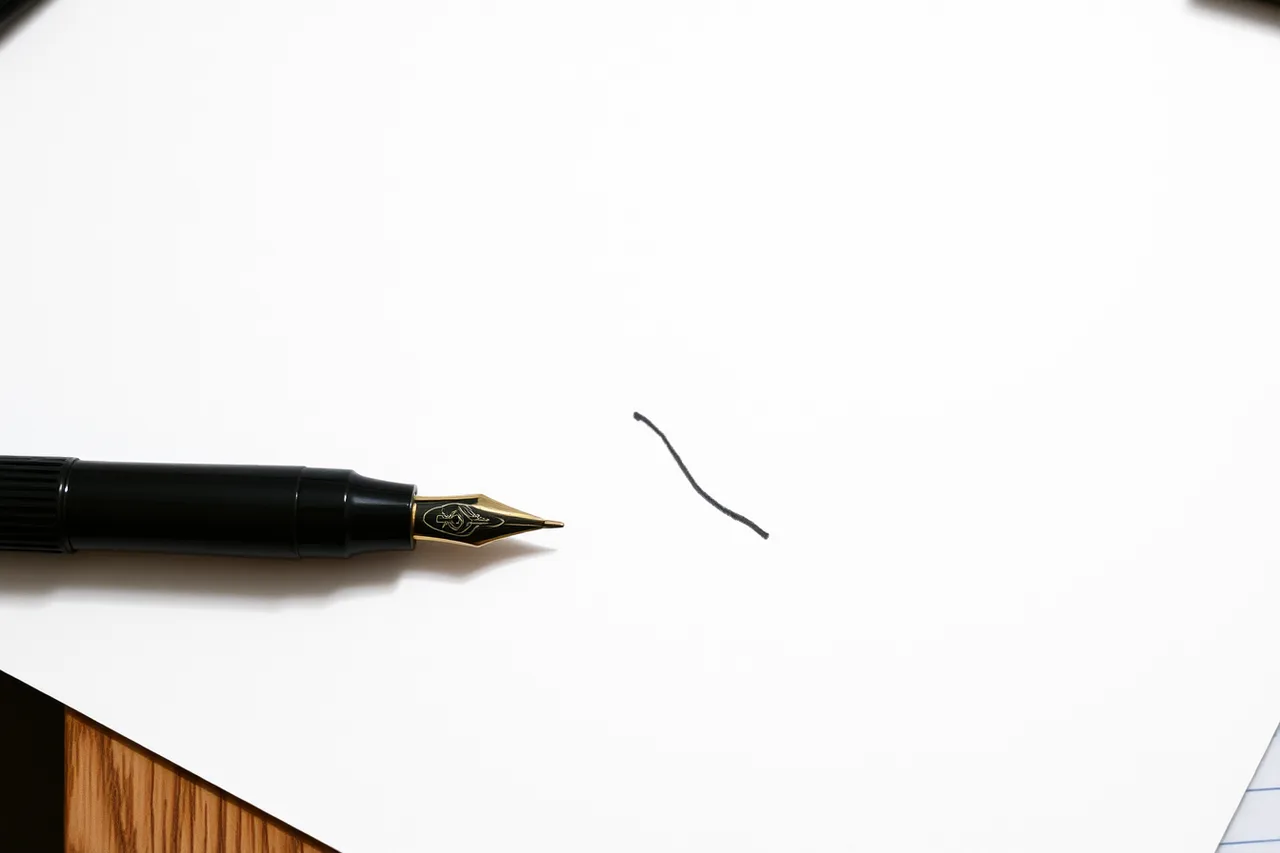
Put the light opposite your writing hand so the pen's shadow falls away from the line. One lamp you can angle beats a bright ceiling fixture, which throws your head shadow on the page.
Leave a clear zone the width of your forearm to the writing side. Cramped elbows produce the clenched grip that makes people say fountain pens are tiring.
Water, and which water
Flushing is most of pen maintenance, and the water matters. Hard water carries dissolved calcium and magnesium, and the hardness of your supply varies enormously by region. Those minerals leave the same scale in a feed that they leave in a kettle, and they can react with some inks in the converter.
If your kettle furs up quickly, the visible mineral scale is a practical sign that your tap water is hard. Flush with distilled or deionized water and use tap water only for the first rinse. Keep two small jars: one for the dirty first rinse, one clean. Change the clean one when it colors.
Where things live
- Bottles upright in a shallow box with a lid, on a low shelf, never above the writing surface.
- Pens nib up in a cup, or flat in a tray. Nib down invites a slow leak into the cap.
- Paper flat and closed, away from an outside wall and away from any radiator.
- A cloth and a stack of cheap paper towels within reach, because you will knock something over.
A complete one-shelf example
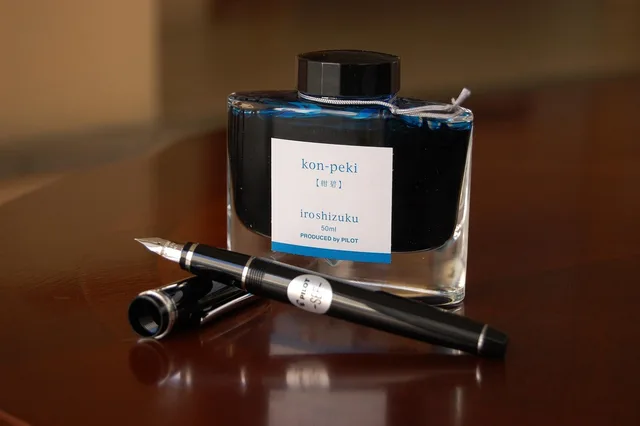
Choose a stable shelf with at least two feet of clear writing surface and enough room beside it for a lamp and a lidded box. Put a Pilot Metropolitan fountain pen, a bottle of Pilot Iroshizuku ink, and a Rhodia Webnotebook in the writing area. Store ink bottles upright in an IKEA KUGGIS box with a lid, and keep two rinse jars, a cloth, and paper towels nearby. Set an IKEA FORSÅ lamp opposite your writing hand, and keep the jars away from open paper. This puts the writing tools and their storage on one shelf while leaving the notebook flat and closed when you are not using it.
Damp costs more than anything on your desk
Paper stored in a humid corner grows the brown spots called foxing, and the causes are a mix of metal traces, cellulose breakdown and airborne fungal material. When conservators examined the foxing on Leonardo da Vinci's self-portrait, they found no living infection in the sheet but did find fungal material and spores that could be involved in the staining.
For a home desk, air movement and dryness matter more than the box you choose. A cardboard box in a dry interior cupboard beats an expensive airtight case in a damp basement, which traps moisture against the paper.
The same reasoning shapes how to store materials once a small collection starts to grow past one shelf.
Setting it up in an hour
Clear the shelf completely, then set the IKEA FORSÅ lamp opposite your writing hand. Put the Pilot Metropolitan and Rhodia Webnotebook in the writing area, with the active ink bottle nearby while you write. Arrange the lidded IKEA KUGGIS box, rinse jars, cloth, and paper towels at the other end. Write a line to check the lamp’s shadow.
Fill one jar with clean water and one for the dirty first rinse. When you finish writing, cap the ink bottle and put it upright in the box. Keep the Rhodia Webnotebook at the back of the shelf for notes on the pen and ink pairing; if you are still choosing a pen, consult the beginner field guide. Then stop buying furniture and write.