Reviews
Can pen storage earn its price, or is it just decoration?
No product reviews here. What a case, roll or tray is actually for, which materials cause damage, and the four checks that separate storage from decoration.
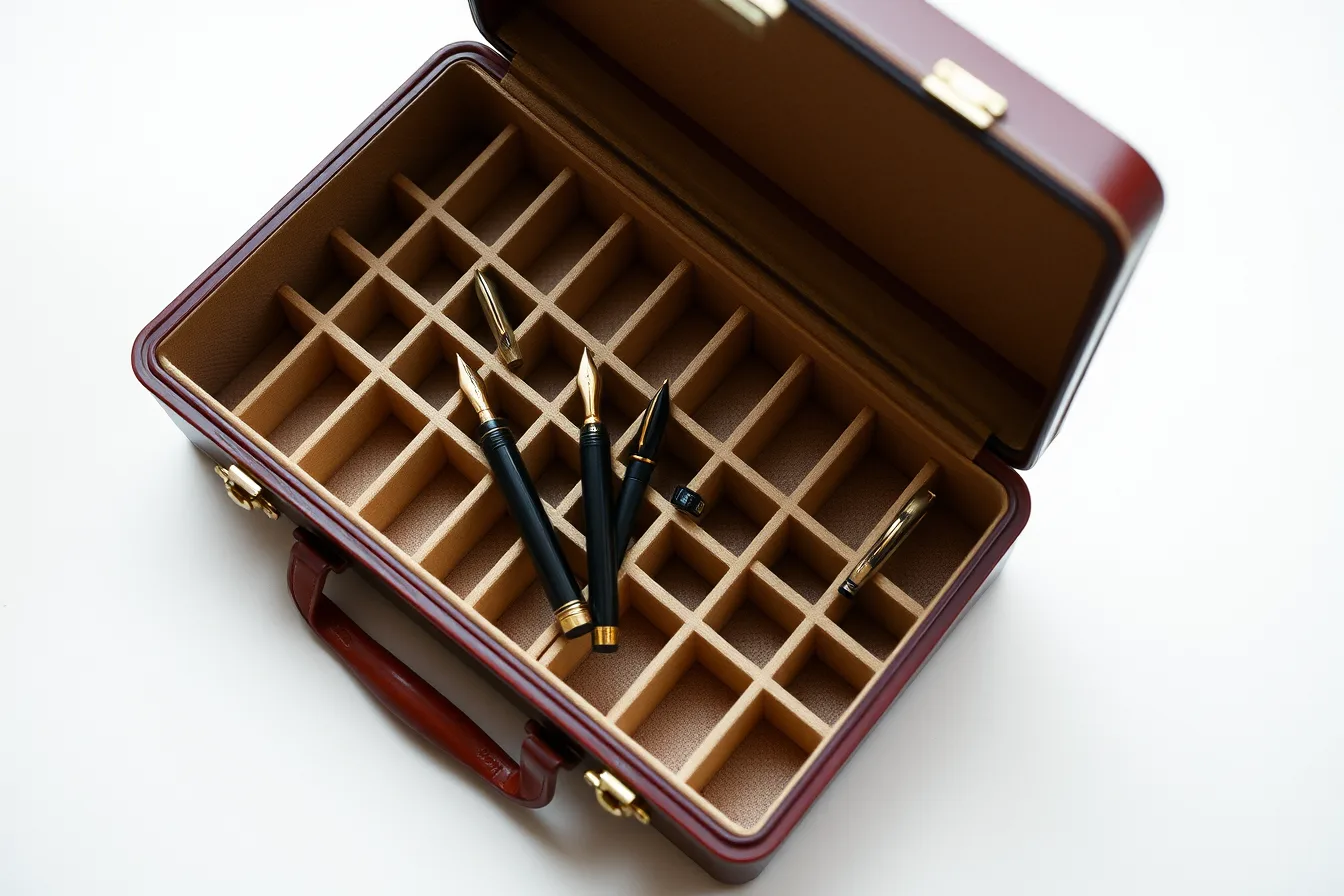
No products are reviewed on this page. Pen cases are sold on appearance, they change every season, and the differences that matter are in materials you cannot see in a photograph. What follows is what storage has to achieve, what the common materials do over time, and how to check any case before you trust a pen to it.
What to take away
- Storage has four jobshold position, cushion impact, exclude light, and not attack the pen.
- The fourth job is the one products fail. Materials emit and migrate.
- Soft vinyl and cheap foam are the two materials most likely to cause harm.
- A case that will not say what it is made of has answered the question.
The four jobs
What good storage does
- Position
- Holds pens apart, nib up or level
- Cushioning
- Absorbs a drop without gripping
- Light exclusion
- Keeps ink and celluloid out of daylight
- Chemical neutrality
- Emits nothing, absorbs nothing
Failure looks like
- Position
- Pens rolling, caps knocking
- Cushioning
- Crushed clips, dented barrels
- Light exclusion
- Faded barrels, discolored ink
- Chemical neutrality
- Sticky surfaces, tarnish, staining
Enclosures can attack what they hold
This is not a theoretical risk. Conservation researchers classify storage-environment corrosivity because the enclosure is part of that environment.
Work on lead corrosion and corrosivity classification in archives, museums and churches assessed how corrosive indoor storage environments are to a sensitive metal, and materials in the room and the case drive the result.
For pens the sensitive parts are plated trim, exposed nibs and older plastics. A wooden box with an unsealed interior, a case lined with an unknown adhesive, or a drawer that smells of anything are all reasons for caution.
Soft plastic is the material to avoid
The clearest single material warning concerns flexible vinyl. Plasticizers are not chemically bound into the polymer, and they move. A study using rapid analytical detection of plasticizer migration from ultraviolet-aged PVC films tracked exactly that migration after the film had been aged under ultraviolet light.
In practice this is why a pen left in a soft vinyl sleeve for a year comes out tacky, and why the sleeve itself becomes stiff. Rigid plastics and untreated natural fibers are far safer choices for anything stored long term.
Why no products are named
Case reviews go stale fast. Models are discontinued, linings change between production runs without the name changing, and reviewers rarely open the case.
A case that was excellent two years ago may now be the same outer shell over different foam. The four checks below survive all of that because they test the object in front of you.
Four checks before you buy
- Smell the inside. A strong chemical or sweet smell is an emission you will be storing your pens in.
- Press the lining. If it is soft foam, expect it to break down within a few years.
- Check the fit. Pens should not touch each other or be gripped tightly by elastic.
- Ask what it is made of. Leather, wool felt, cotton and rigid plastics are all answerable questions.
None of that requires a review. The desk arrangement that reduces the need for storage in the first place is in the small space setup, and the faults that bad storage causes are listed in pen mistakes and fixes.