Reviews
Part of Can pen storage earn its price, or is it just decoration?
Where should pen storage actually sit in a room?
Where pen storage should sit, and what it should sit on: location beats container. Which rooms and surfaces suit stored pens and paper, why depots are monitored.
The container gets all the attention and the location does most of the work. A cheap tray in a stable interior cupboard will preserve pens better than an expensive case in a conservatory. This page is about choosing the spot, then choosing what the storage rests on.
What to take away
- Pick the room first. Stable temperature and moderate humidity beat any container.
- Avoid outside walls, windows, radiators, bathrooms, lofts and garages.
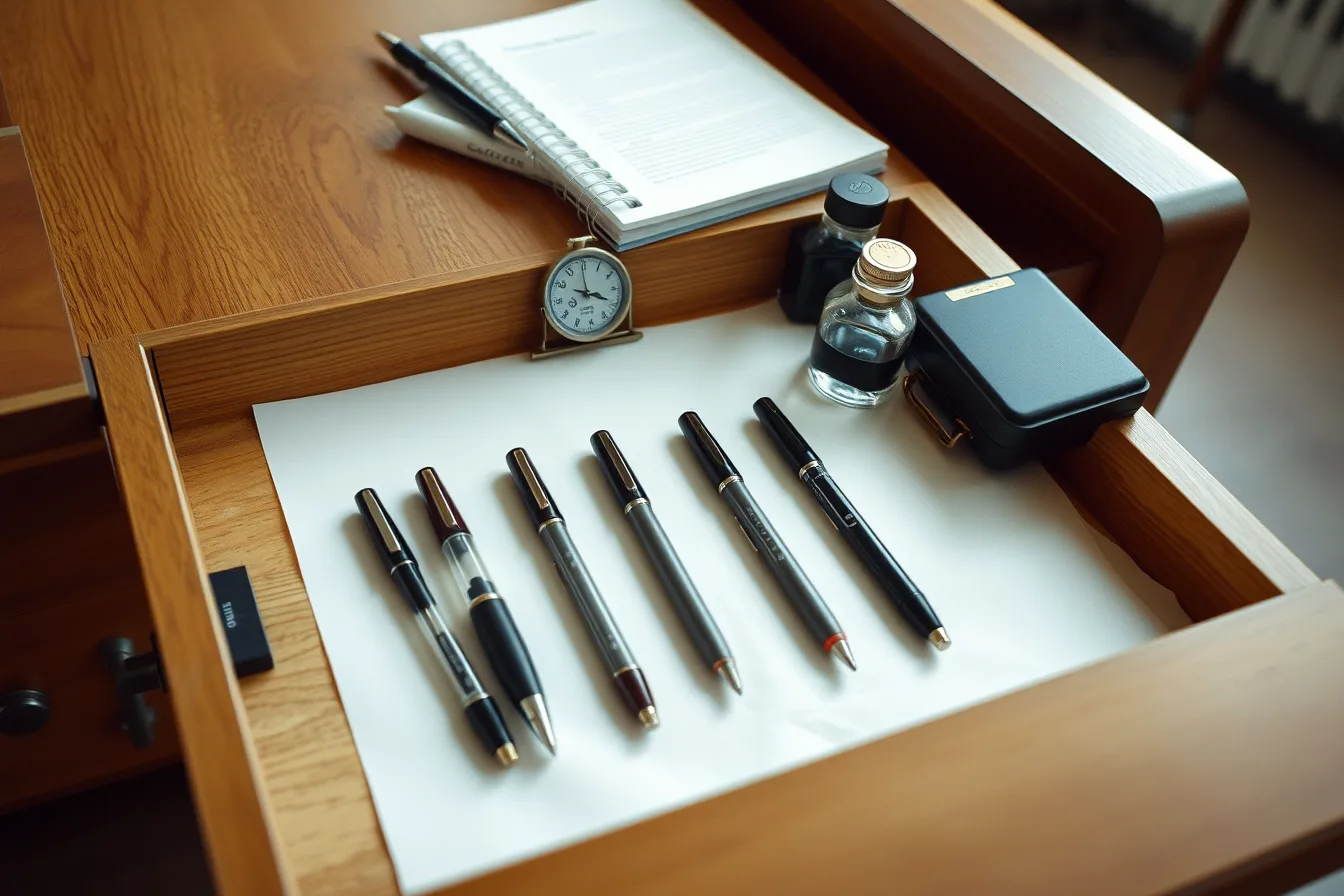
- Unsealed wood and some finishes emit vapors, so line the surface under the storage.
- Measure the candidate spot for a week before committing anything valuable to it.
Ranking the spots you already have
Where pen storage actually sits in a room decides how well the pens keep, so rank the space you already have before buying anything.
Pen storage spot suitability
Location
- Interior cupboard or drawer
- Best
- Bookshelf on interior wall
- Good
- Desk drawer
- Good
- Windowsill or sunny shelf
- Poor
- Loft or garage
- Poor
- Bathroom or kitchen
- Worst
Suitability
- Interior cupboard or drawer
- Stable, dark, ventilated
- Bookshelf on interior wall
- Stable, exposed to light
- Desk drawer
- Convenient, watch equipment heat
- Windowsill or sunny shelf
- Light and temperature swings
- Loft or garage
- Extreme temperature and humidity swings
- Bathroom or kitchen
- Humidity spikes and airborne grease
Why
- Interior cupboard or drawer
- Bookshelf on interior wall
- Desk drawer
- Windowsill or sunny shelf
- Loft or garage
- Bathroom or kitchen
Ranking the spots
- Interior closet shelf, middle floor.Steadiest temperature, no direct sun, least dust.
- Interior wall drawer in a room you heat daily.Dark, stable, clear of foot traffic.
- Upper shelf of an interior bookcase.Good if no radiator sits under it.
- Basement shelf on an interior wall, off the floor.Damp, but workable if the meter shows a narrow swing.
- Exterior wall cupboard.It tracks outdoor weather, so the range widens.
- Attic or loft shelf.The widest daily swing in the house.
- Bathroom cabinet.Steam pushes humidity up and down fast.
- Windowsill or conservatory shelf.Direct light and trapped heat, the worst spot here.
Why professionals monitor the room, not the box
A survey monitoring fungal diversity and microclimate in nine different museum depots measured airborne fungal populations and climate conditions across storage spaces. That is the standard way to work out whether a depot is a safe place to keep things.
Depots also track the materials inside, and stored paper suffers from the same curl, acid and light problems.
The home version is smaller but the logic is identical. Put a cheap hygrometer in the candidate cupboard for a week, read it morning and evening, and note the range rather than the average.
Museum guidance for mixed collections typically lands near 50 percent relative humidity, with the swing kept as small as the building allows.
A home cupboard is usually workable between 40 and 60 percent; a daily swing under 15 points is comfortable, and a swing past 20 points is the warning line. A cupboard that swings twenty points in a day is a bad cupboard however convenient it is.
The building matters more than the furniture
Indoor conditions are set by the building. Stanford's environmental health and safety program covers healthy buildings as its own topic, including indoor environmental quality.
For your purposes the useful implications are simple. Interior rooms are more stable than exterior ones. Rooms heated intermittently swing more than rooms heated steadily.
Any space that gets cold overnight and warm in the afternoon cycles moisture through everything in it. The storage habits that damage pens are mostly about the room, not the container.
Measure before you move anything
A hygrometer costs less than a pen sleeve and settles arguments that guesswork cannot. Put it in the candidate spot, then read it twice a day for a week and write the numbers down.
If the range stays inside 40 to 60 percent with a daily swing under 15 points, you have found your storage. If the swing passes 20 points, pick a different room.
What to put under the storage
What to put under
- Line unsealed wooden shelves with acid-free board, cork sheet, or felt.
- Keep storage off the floor, away from cleaning water and from vacuum impacts.
- Leave an air gap behind a case rather than pushing it against the back wall.
- Put felt or cork under a heavy case so it does not slide against the shelf.
- Do not stack cases directly on top of each other if any of them are leather.
The equivalent question for the writing surface itself is covered in what to put under the page, and what the storage itself has to achieve is in judging pen storage.