Costs
Where do the hidden costs in a fountain pen budget come from?
Fountain pen costs, budgets and the expenses nobody mentions: the full cost of writing by hand, including duty on imported pens, shipping, sales tax.
The sticker price of a pen is the part of the cost that is easiest to find and the least useful to know. What decides whether this hobby is cheap or expensive is the recurring spending and the surprises. Neither appears in a review. Both are predictable if you write them down before you start.
What to take away
- Paper is the recurring cost. Pens are a one-time cost that people misremember as recurring.
- Importing a pen makes you the importer, with the duties and fees that come with it.
- Sales tax, shipping and the return you did not make are all real parts of the price.
- Budget a line for mistakes. Everyone buys two or three things they do not use.
The cost categories
| Category | Frequency | Notes |
|---|---|---|
| Pens | Rare | Lumpy, then nothing for years |
| Paper and notebooks | Continuous | The real budget, scaled to how much you write |
| Ink | Occasional | Small, unless you collect colors |
| Shipping and duty | Per order | Easy to underestimate on foreign purchases |
| Repairs and nib work | Rare | Real, and worth budgeting for once |
| Storage and tools | Once | Larger if bought before you know what you own |
| Mistakes | Early and often | Assume two or three |
Names make this real, at typical US street prices. A Rhodia A5 pad runs $8 to $12. A Midori MD A5 notebook is $15 to $20.
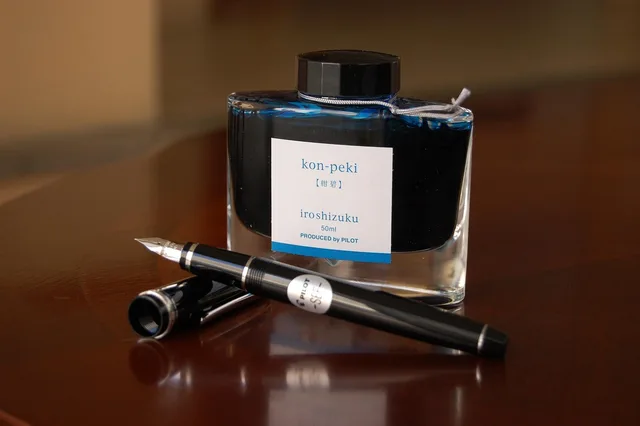
Diamine 30 ml ink costs $8 to $10. A Pilot Iroshizuku 50 ml bottle is $22 to $28. A Pilot Metropolitan is $20 to $25, a Lamy Safari $30 to $40. Nib tuning runs $30 to $60.
Importing costs more than the listing says
Ordering a pen from abroad looks cheap until the package arrives. Customs and Border Protection is direct: goods moving from a foreign country to the United States are imports.
Import Cost Steps
- Order from abroad
- Package arrives
- Customs and Border Protection
- Duty and processing fees
- Storage charges if held
- Total delivered cost
When you buy from foreign sources you become the importer, responsible for federal and state import rules. Duty, processing fees and, in the worst case, storage charges while an item sits in customs are all yours.
The US de minimis threshold is $800 per person per day. Most packages under that value clear with no duty or tax. Goods from China and Hong Kong lost that exemption in 2025.
Above it you pay duty plus a processing fee of about $2 to $9, and carriers often add a brokerage fee of roughly $10 to $20. Duty on pens and paper is typically under 5 percent, and many notebooks enter free.
Domestic shipping runs $5 to $10. A parcel from Japan or Europe runs $15 to $30.
A cheap listing plus international shipping can land above a domestic price. Work out the total delivered cost before you compare anything. Check whether the seller ships with duties prepaid or leaves the bill for you at the door.
A pen held in customs for a fortnight is a pen you cannot write with. That is a cost of a different kind.
Counting the way statisticians do
National spending statistics hide a useful distinction. The Bureau of Labor Statistics keeps a glossary for the Consumer Expenditure Surveys.
Your expenditure is what you paid for the item. Your outlay is what actually left your account, which includes tax, shipping and any financing. Track outlays. That is the number that determines whether this feels affordable.
Budgeting for a year
- Estimate pages per week, then paper per year. That is your base.
- Add one bottle of ink per year, which is generous for most people.
- Add a pen allowance you only spend once, if at all.
- Add a repair lineone nib adjustment or one seal replacement.
- Add fifteen percent for mistakes and call it tuition.
Ten pages a week is 520 pages a year. Three A5 notebooks of about 180 pages at $10 to $15 each cover it, so paper runs $30 to $45. One 50 ml ink bottle at $12 to $25 lasts most writers that long.
Four domestic orders at $5 to $10 add $20 to $40 in shipping. One nib adjustment costs $30 to $60 if you need it. Fifteen percent for mistakes adds $10 to $25. The year totals $72 to $195.
Pens are not in that total. A $20 to $40 pen covers several years of writing.
Comparing individual purchases against that frame is the subject of comparing a first setup. If you would rather find your real numbers than estimate them, work through the weekend audit.
Common questions
Is a fountain pen cheaper than disposable pens over time?
What is the largest hidden cost?
Should I budget for professional nib work?
How do I stop the collecting from running away?
In this guide
- Building a writing setup: what to spend on, what to improvise, and what to skipA practical guide to setting up a writing desk: what to spend on, what to improvise, what to skip, how to check your position, and an hour of free setup steps.
- 4 points on fountain pen costs that matterFour fountain pen costs decide what a beginner actually pays, namely the pen, the ink, the paper, and the repair bills that follow cheap paper.
- How to keep a fountain pen purchase log and disclose giftsHow to log fountain pen purchases: date every price you paid, keep gifts and loaners out of your total, photograph honestly and disclose free items clearly.
- Starter fountain pen setups, compared by cost per year, not priceThree real starter fountain pen setups costed over five years, so you can see where the money goes and which one actually runs cheapest to write with daily.
- What does a weekend really cost you in fountain pen habits?A weekend audit of what writing by hand costs, with real prices, a cost-per-page method and the ink bottle outlay most people forget to count.