Costs
Part of Can pen storage earn its price, or is it just decoration?
Working out a fair cost per pen for any storage option
A cost per pen stored model, where a premium is genuinely buying something, and the two ways storage purchases go wrong before the parcel arrives.
Storage is where people spend most and get least. It is easy to buy, photographs well, and improves nothing visible.
Keep it honest: price storage per pen stored and compare that number against the pens themselves. If a case costs more than the pens in it, that is a decision, not an accident. Make it deliberately.
What to take away
- Price storage per pen stored, and compare it against the value of the pens.
- A premium buys lining, retention and construction. It does not buy protection by itself.
- Homemade storage is genuinely competitivefelt and a rigid box do most of the job.
- Know your rights on delivery before you order from an unfamiliar seller.
Cost per pen stored
Rough cost behavior
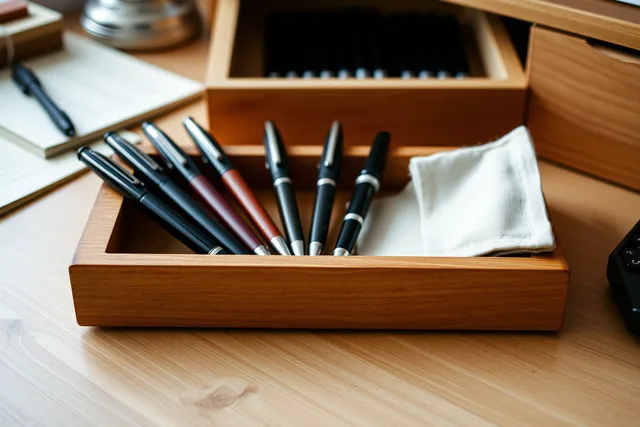
- Saucer or shallow tray
- Nearly free
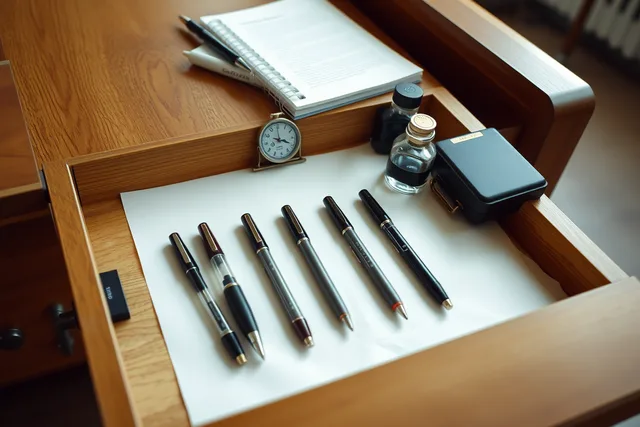
- Cut felt in an existing drawer
- Cost of a felt sheet
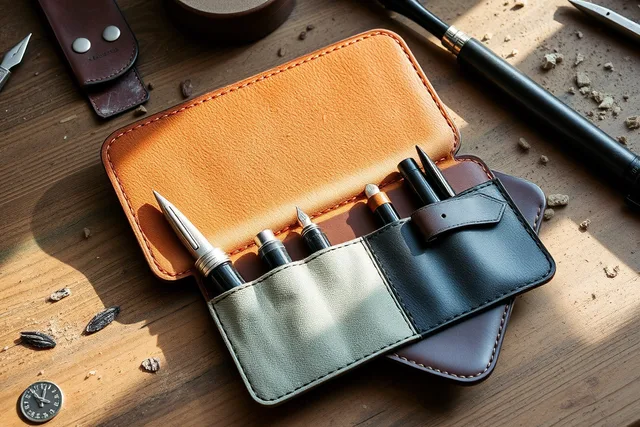
- Three-pen sleeve or wrap
- One modest purchase
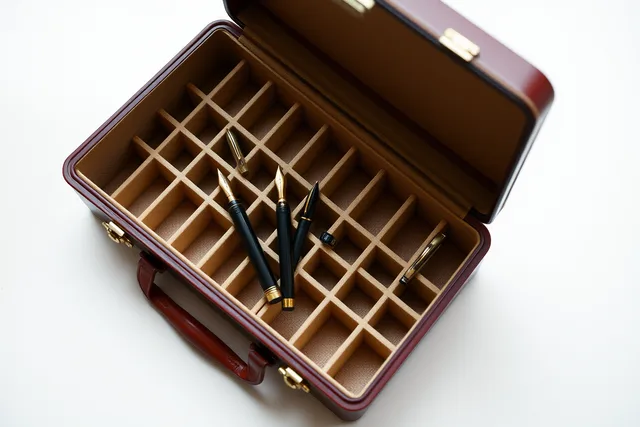
- Twelve-pen leather case
- One large purchase
- Display cabinet
- Large, plus the light problem
Cost per pen stored
- Saucer or shallow tray
- Negligible
- Cut felt in an existing drawer
- Very low
- Three-pen sleeve or wrap
- Low
- Twelve-pen leather case
- Moderate to high
- Display cabinet
- High, and it stores badly
Work out the number before you buy. A twelve-pen case bought for four pens has a cost per pen three times what the label suggests, and it also encourages the collecting it was meant to organize.
What a premium actually buys
Three things, and they are worth paying for when they are present. An inert lining that will not degrade. Retention that holds a pen without gripping it. Construction that can be repaired or relined rather than replaced. Anything beyond those is appearance, which is a legitimate thing to want as long as you know that is what you are buying.
What a premium should buy
- Inert lining that will not degrade
- Retention that holds without gripping
- Construction that can be repaired or relined
- Appearance, only if you know it
Everything else people pay for, including brand, hardware and packaging, does nothing for the pens.
Learn what to look for before you spend
The knowledge is free and the products are not. The Illinois Preservation Self-Assessment Program publishes its bibliography of the collections care and preservation literature it drew on, including collections management and local history guidance from professional associations.
Reading even a little of that literature changes what you buy, because it shifts your attention from the outside of an enclosure to what it is made of. That is a free change that saves money on the next purchase rather than this one.
Know the delivery rules before you order
The other way storage money disappears is an order that never turns up.
The Federal Trade Commission's guidance on what to do when you are billed for things you never got explains the federal Mail, Internet, or Telephone Order Merchandise Rule. It covers most mail, online, or phone orders and sets shipping-time duties for sellers.
Small leather goods are often made to order with long lead times, which is legitimate, but the lead time should be stated before you pay. If it is not stated, ask, and keep the answer.
Cheap options that actually work
- A shallow ceramic dish as a desk tray.
- Wool felt cut to fit a drawer, replaced when it gets grubby.
- A rigid pencil box lined with the same felt.
- A cotton sock, cut and hemmed, as a travel sleeve.
The order to acquire storage in is in what to buy first, and the cost-per-page arithmetic that this mirrors is in pricing by the page.