Reviews
Part of Can pen storage earn its price, or is it just decoration?
5 pointers on pen storage products that hold up
A tray, a sleeve and a drawer, in that order. What each one solves, when a case is genuinely needed, and what to assess before spending anything.
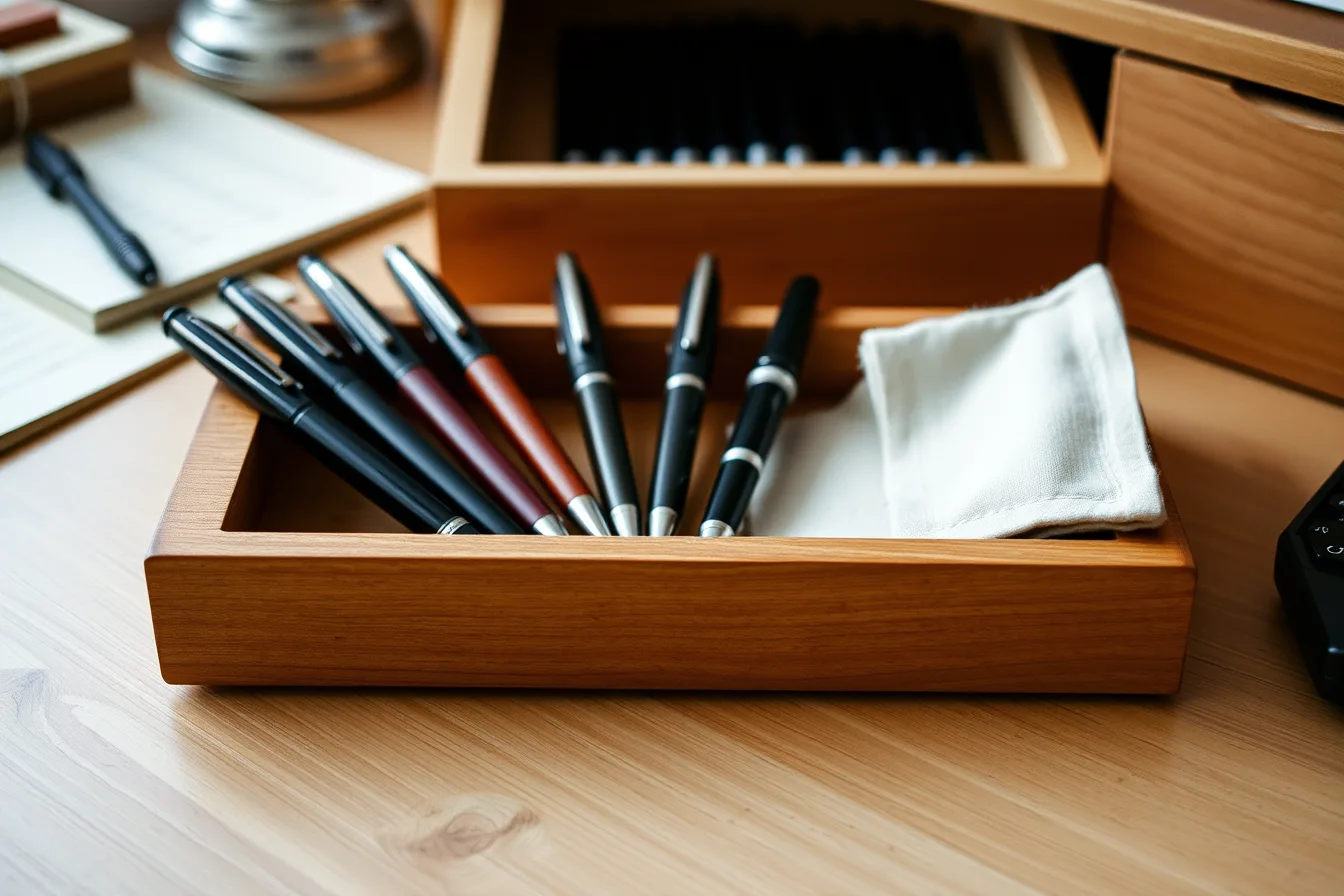
Almost nobody needs a pen case first, and most people need a desk spot for the pen they use plus a closed spot for two or three they do not. Both cost almost nothing.
A case is a travel solution, and buying one before you travel is the most common storage purchase people regret. A maker building pen storage by hand decides material and closure before cutting anything.
What to take away
- Buy in this ordera tray, a soft sleeve, a lined drawer. A case comes fourth.
- Assess your conditions before buying anything. Free assessment tools exist.
- Wool felt or cotton linings. Not foam, not soft vinyl.
- Buy for the number of pens you own now, not the number you imagine owning.
The order
| Order | Item | Solves |
|---|---|---|
| 1 | A shallow tray for the desk | Rolling pens and knocked bottles |
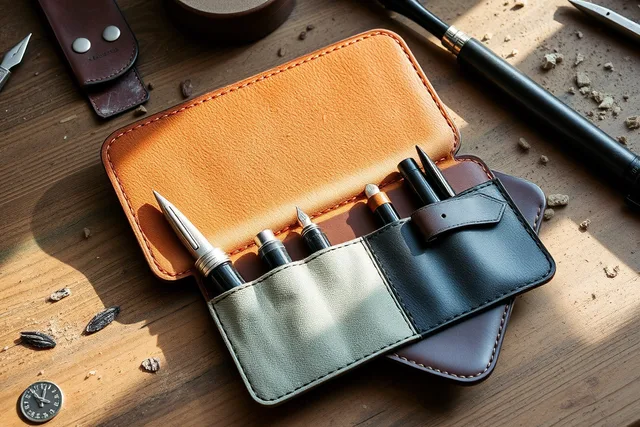
| 2 | One soft sleeve per pen you carry | Scratches in a bag |
| 3 | A lined drawer or a rigid box | Everything not currently in use |
| 4 | A roll or a case | Carrying several pens at once |
| 5 | Anything with a lock or a window | Nothing, usually |
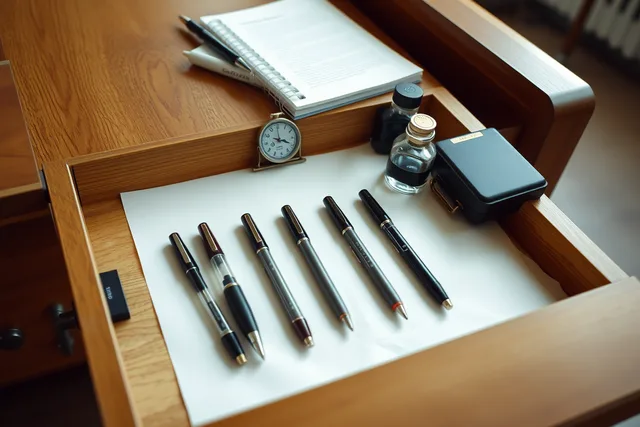
The tray is the highest-value item and can be a saucer. The sleeve can be a cut-down sock. Neither of those is a joke: both do the job that the expensive object does.
Storage order and what each solves
Order
- 1
- Shallow desk tray
- 2
- Soft sleeve per pen
- 3
- Lined drawer or box
- 4
- Roll or case
- 5
- Lock or window
Item
- 1
- Rolling pens, knocked bottles
- 2
- Scratches in a bag
- 3
- Everything not in use
- 4
- Carrying several pens
- 5
- Nothing, usually
Solves
- 1
- 2
- 3
- 4
- 5
Assess before you buy
Storage decisions should follow an assessment of what you actually have and where it lives. Institutions do this formally, and their tools are public. The Illinois Preservation Self-Assessment Program is a free online tool that guides collection managers through evaluating materials, storage and exhibit environments and institutional policies, and produces reports on the factors affecting the health of the collection.
Assess first, then choose enclosures
- Assess what you have and where it lives
- Assess the environment around the pens
- Choose enclosures only afterward
- Reverse of how storage is usually bought
Nobody is suggesting you run an institutional assessment on nine pens. The transferable idea is that the environment is assessed first and the enclosures are chosen afterward, which is the reverse of how storage is usually bought.
Compare on stated criteria, not on impressions
When the options differ in ways you cannot see, the answer is to write down the criteria first. That is how federal working groups approach the same problem: FADGI's file format comparison work exists to set out the tradeoffs between options against defined criteria rather than leaving the choice to preference.
Your criteria for storage are short: lining material, retention method, whether metal touches the pens, and whether it can be cleaned. Score two candidates against those four and the decision usually makes itself.
Buy for the pens you own
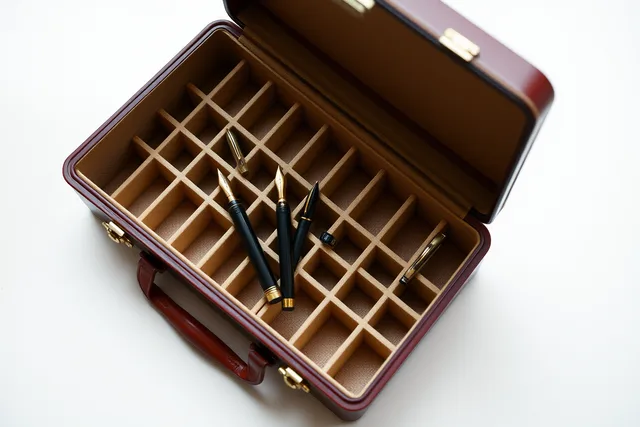
Storage bought for a future collection tends to create one. A twelve-slot case with four pens in it reads as eight empty slots every time you open it, and empty slots are a shopping list. Buy for what you own now, and buy again later if the collection genuinely grows.
What not to buy first
- A display case, which optimizes for looking rather than keeping.
- A large multi-pen case bought for a collection you do not have yet.
- Anything foam-lined, at any price.
- A humidity-controlled box, before you have measured your room.
Where storage should live once you own it is covered in where storage should sit, and what any of it has to achieve is in judging pen storage.