Guides
How fountain pen ink reaches the paper: a beginner's guide
How a fountain pen moves ink, what dye and pigment inks do differently, why paper changes the line, and the two habits that prevent most first-pen trouble.
A fountain pen is a small plumbing problem that happens to produce letters. Ink sits in a reservoir, air replaces it as ink leaves, and a slotted feed carries it to the nib.
Most first pens left in a drawer were not bad pens. They were dry from crusted ink in the feed, scratchy from a nib rotated off the sweet spot, or blotting on the wrong paper.
What to take away
- The pen, the ink and the paper are one system. Change any of the three and the line changes.
- Ink reaches the nib by capillary action, so a clean wet feed matters more than what the pen cost.
- Dye inks give the widest color range and fade first. Pigment and carbon inks last longer and clog sooner when neglected.
- Two habits prevent most beginner troubleflush the pen when you change ink, and cap it whenever you stop writing.
How the ink gets to the paper
The feed under the nib has a narrow channel and fins, and ink travels down that channel like water climbing a paper towel, by capillary action. Adhesion to the channel walls beats the cohesion holding the liquid together.
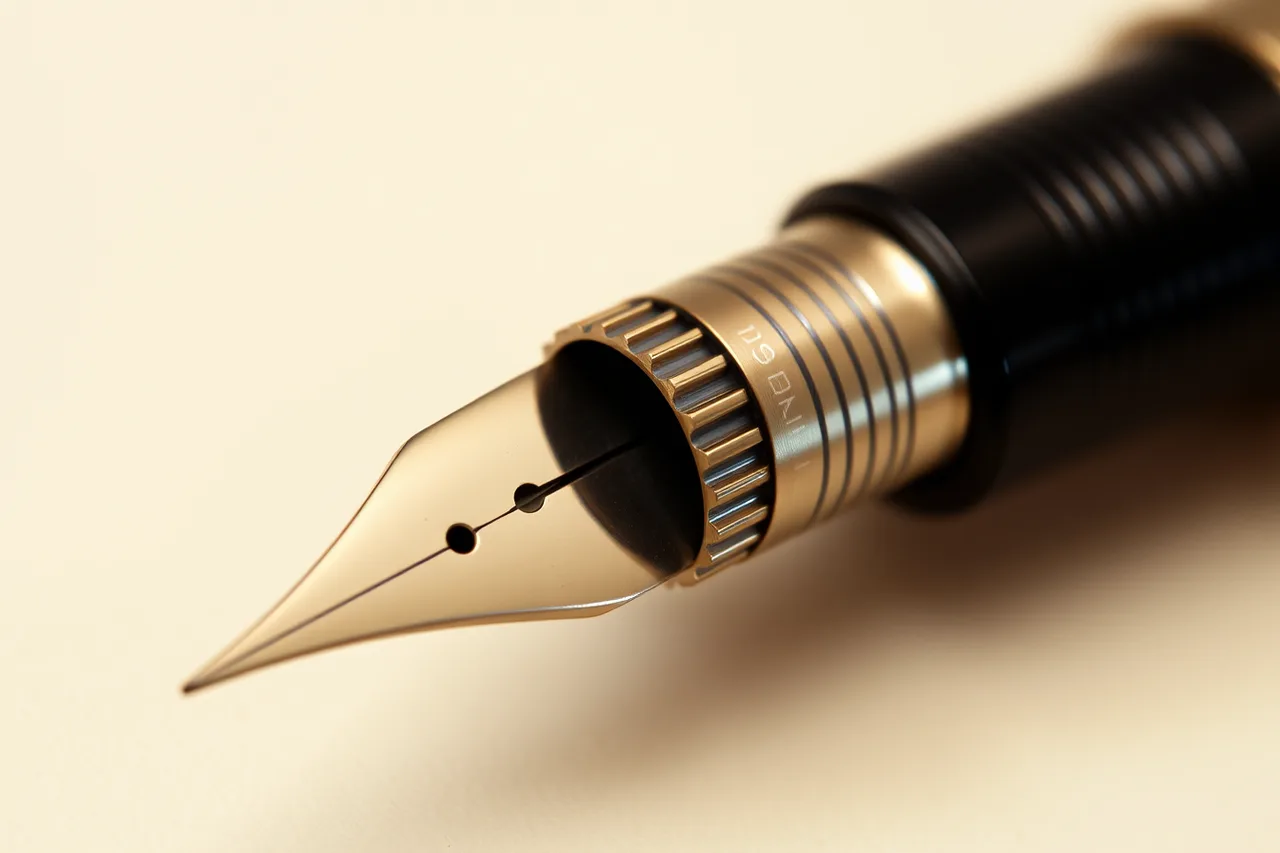
The fins hold a buffer and absorb ink that expands from the barrel when the pen warms in your hand.
That explains two common failures. A pen that skips after a pause has lost the film of ink at the tip to evaporation. A pen that blobs in a warm pocket has pushed ink past the buffer. Neither is a defect.
What is actually in the ink
Writing ink is a colorant, a carrier that fixes the color to the sheet, and additives that adjust flow, drying time and viscosity. The split that matters for a beginner is dye against pigment.
Dye vs pigment vs iron gall
Dye
- Form
- Dissolved
- Light fading
- At risk
- Washout
- Washes
- Paper risk
- Low
- Era
- Modern
Pigment
- Form
- Solid particles
- Light fading
- Holds color
- Washout
- Washes
- Paper risk
- Low
- Era
- Carbon black, ancient
Iron gall
- Form
- Bites fiber
- Light fading
- Stable
- Washout
- Cannot be washed
- Paper risk
- Can eat sheet
- Era
- 5th c.-1900s
As the University of Illinois guide to inks and other media sets out, dye colorants dissolve and are the ones at risk of fading under light. Pigments sit as fine solid particles and hold their color far better. Carbon black has been in use for thousands of years and is still the most stable black there is.
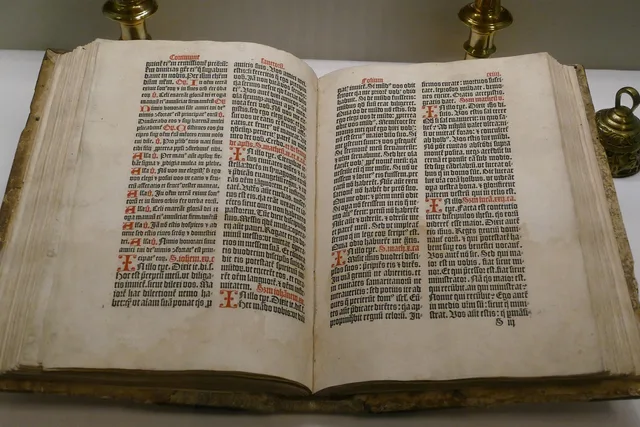
Iron gall ink, which ran from the fifth century into the early 1900s, bites into the fiber and cannot be washed out. That is why old documents still carry it, and also why it can eat through the sheet.
The paper decides what you see
Two people can use the same pen and ink and get lines that look nothing alike.
Diagnose the line by symptom
Furry, feathered edges?
harder sized paper
ink through to the back?
| What you see | Usual cause | What to change |
|---|---|---|
| Furry, feathered edges | Weak sizing | Harder sized paper |
| Ink through to the back | Thin sheet, wet nib | Heavier paper, finer nib |
| Smearing, slow drying | Ink sitting on the surface | Blot, or a drier ink |
| Gray, thin line | Dry feed or slow ink | Flush the pen |
None of those is a fault in the pen. Rule out the paper first.
A first setup that holds up
- One pen with a medium nib. Fine nibs punish cheap paper and an unsteady hand.
- One bottle of plain dye ink, plus a converter if the pen takes cartridges.
- A pad of well sized paper, kept as the reference you judge everything else against.
- A cup of water, a paper towel, and five minutes a month for flushing.
If the pen will live on a desk in the corner of a room, the small space setup matters more than the pen does. If you want the writing itself to improve, that is a separate project with its own practice plan.
Common questions
Does a more expensive pen write better?
Can I leave ink in a pen I am not using?
Why does my writing look worse with a fountain pen?
Do I need special paper?
In this guide
- Fountain pens setup: fitting everything onto one shelfBuild a fountain pens setup on one shelf with a Pilot Metropolitan, Iroshizuku ink, a Rhodia notebook, covered bottle storage and a rinse station.
- How to judge a lettering, calligraphy or book arts classHow to judge a lettering, calligraphy or book arts class before you enroll: the places that teach, what a good first class covers, and what to ask.
- Fountain pen photography: lighting and backgrounds that workLighting, backgrounds and color control for photographing pens and writing samples, plus the reference targets that make one shot comparable to the next.
- Which properties actually differ between beginner fountain pens?What to compare in a first fountain pen, and how to test it: no brand ranking here. The five things that actually differ between beginner pens.
- A weekend practice plan for learning fountain pens in 2027Fountain pens learning plan: two days of short, structured drills for pressure, angle and letter shape, with the checks that tell you whether the practice is doing.